
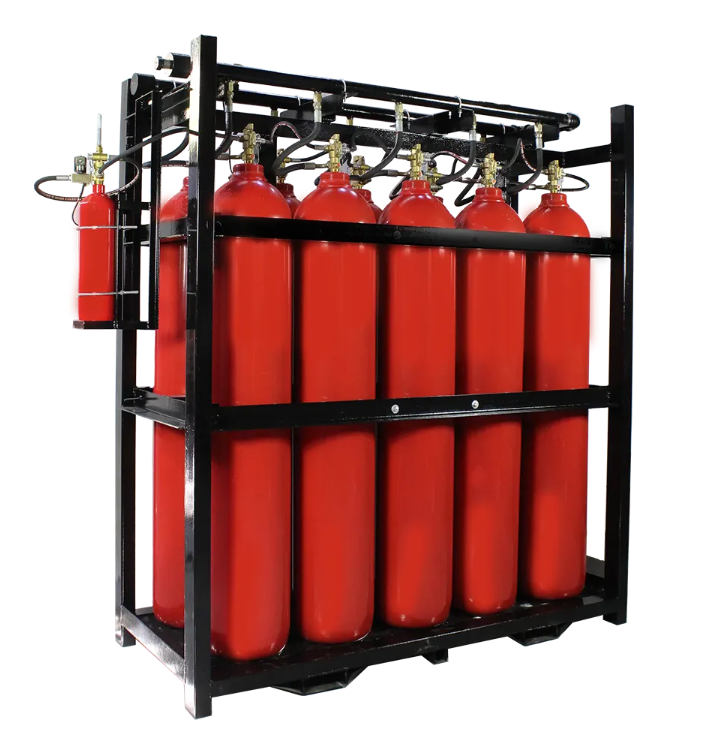
Fire hazards in industrial and technical environments require solutions that act fast and suppress flames effectively at the source. At Azar UAE, we provide reliable CO2 fire suppression system solutions designed to protect critical assets, machinery, and enclosed spaces where traditional fire suppression methods may not be suitable.
With years of experience in fire safety and suppression technologies, we help businesses across the UAE implement systems that respond instantly to fire outbreaks. Our CO2 fire suppression systems are engineered to control fires rapidly while minimizing damage to equipment and infrastructure. From system design to installation and commissioning, we deliver solutions that prioritize safety, efficiency, and compliance.
Choosing the right fire suppression partner is essential for long-term safety and system reliability. We go beyond supplying equipment and deliver complete fire protection solutions tailored to your operational needs.
Our focus is on delivering dependable systems that perform exactly when they are needed most.
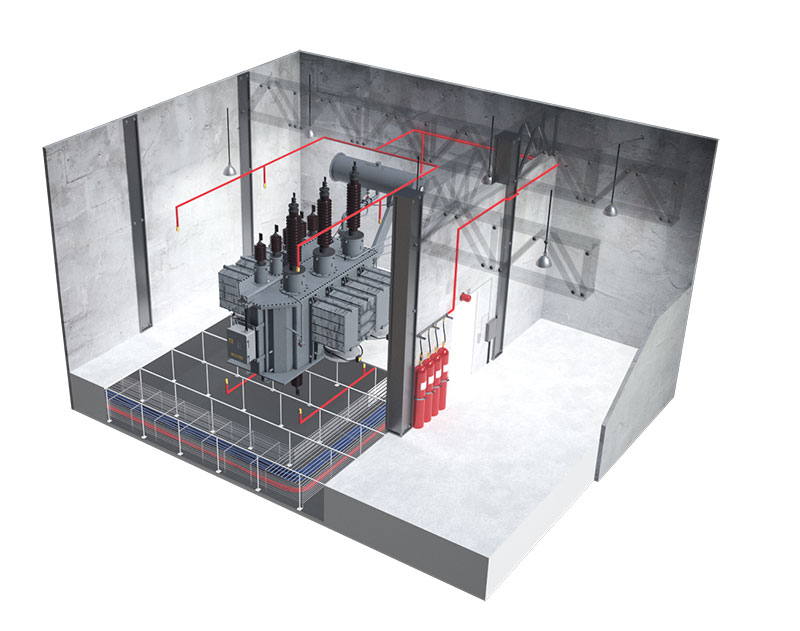
Our CO2 fire suppression systems are built to suppress fires quickly and effectively in high-risk environments.

We analyze fire hazards, room conditions, and operational requirements.

Our engineers design a CO2 fire suppression system tailored to your site.

We install cylinders, piping, and control systems with accuracy and care.

The system is thoroughly tested to confirm proper operation.

We provide ongoing inspections, servicing, and technical assistance.
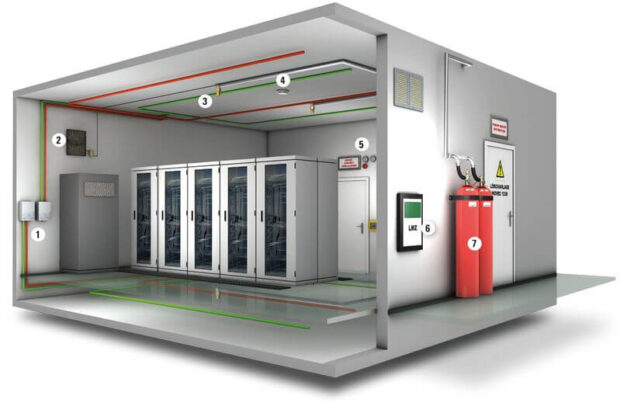
CO2 at fire-extinguishing concentrations is not safe to breathe, and total flooding at that level can be fatal within minutes. That’s why NFPA 12 requires a continuous audible and visual pre-discharge alarm plus an engineered time delay before the gas releases, giving anyone inside time to evacuate, along with a manual abort control outside the space in case the alarm is false or someone is still inside. This is the key difference from an occupied-space agent like Inergen: a CO2 system assumes the room is cleared before discharge, not during it.
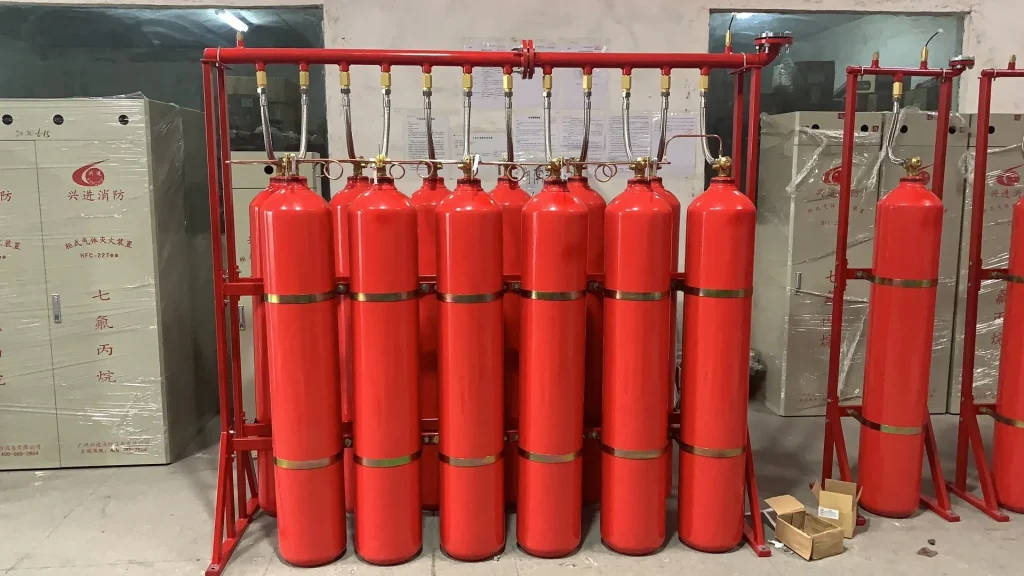
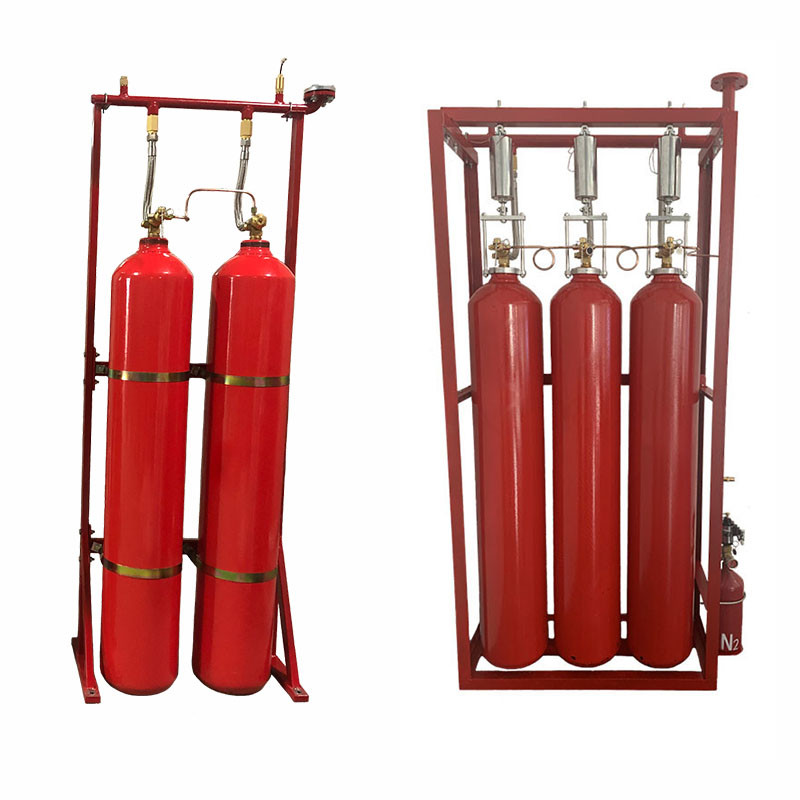
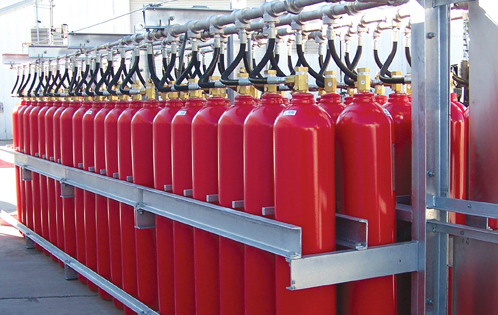
High-pressure systems store CO2 as a liquid in individual cylinders at around 850 to 900 psi at normal room temperature, which suits smaller or medium spaces, server rooms, and retrofits where space is tight. Low-pressure systems store it in one large refrigerated tank at around 300 psi and about minus 20°F, which is more cost-effective for bulk protection across large industrial facilities, multiple hazards, or marine applications that may need several discharges from one supply.
These are exactly the unoccupied or rarely entered, high fire-risk spaces CO2 is designed for: engine rooms, pump rooms, paint booths, and generator rooms combine flammable liquids or energised equipment with the kind of enclosed volume CO2 can flood quickly and completely. It leaves no residue on machinery or in a paint booth’s finish, and being electrically non-conductive, it suits energised electrical equipment that other agents would need shut down first.
Yes. NFPA 12 sets a minimum design concentration of around 34 to 35% CO2 for surface fires, such as flammable liquids, and 65 to 75% for deep-seated fires in ordinary combustibles like paper, textiles, or stored materials, which also need the concentration held in place longer to fully extinguish smouldering material rather than just knock down visible flame. The system is engineered to the specific hazard in a space, not a single fixed dose.
Every CO2 installation includes the pre-discharge alarm and delay already mentioned, plus automatic interlocks that shut down ventilation, close dampers and doors, and de-energise relevant electrical equipment before discharge so the space actually holds the gas at concentration. Warning signage at every entry point, lockout controls during testing or maintenance, and a manual abort station are standard, not optional extras, given how much more hazardous CO2 is to breathe than an occupied-space agent.
CO2 systems are designed and tested to NFPA 12 (Carbon Dioxide Extinguishing Systems), which sets the discharge, concentration, and personnel-safety requirements above. In the UAE, installation also needs Civil Defence approval alongside manufacturer certification for the cylinders, detection, and control components used. AZAR manages that design and approval process as part of installation rather than leaving compliance to be pieced together afterward.
Fire safety is not an area where compromises can be made. At Azar UAE, our CO2 fire suppression system solutions are designed to deliver fast, effective fire control in high-risk environments. By combining proven technology with professional expertise, we help safeguard lives, assets, and operations.
If you are planning to install or upgrade a CO2 fire suppression system, our team is ready to assist with expert guidance and reliable solutions. Contact us today to discuss your fire protection requirements and take a confident step toward enhanced safety.