
Fire suppression in a commercial building is not simply about installing sprinklers or placing fire extinguishers on every floor. In the UAE, the required fire protection approach depends on the building’s occupancy, size, height, fire risk, layout, stored materials, and the systems needed to protect people and property.
For building owners, facility managers, contractors, and developers, understanding the UAE Civil Defence fire suppression requirements is essential before designing, upgrading, or approving a fire protection system. The right approach must combine compliant equipment, proper engineering, reliable water or suppression-agent supply, detection, alarm integration, testing, and ongoing maintenance.
One of the most important points in commercial fire protection is that there is no single suppression system suitable for every building.
The design should begin with an assessment of the facility and its risks.
The fire protection design may consider:
This assessment determines whether the building requires automatic sprinklers, wet or dry systems, clean agent suppression, water mist, foam, pre-action protection, or another approved solution.
The UAE Fire & Life Safety Code of Practice provides requirements for different occupancies, while Dubai Civil Defence checklists also specify technical requirements for systems such as sprinklers and clean agents.
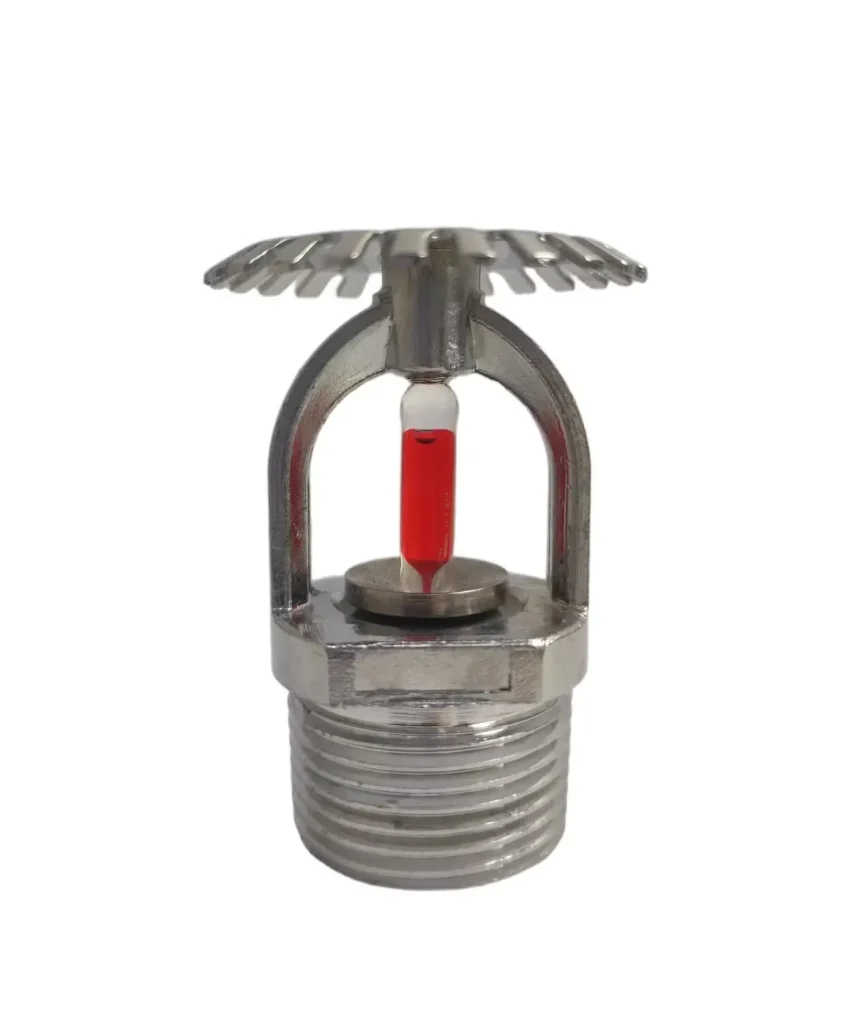
For many commercial buildings, an automatic fire sprinkler system is one of the primary methods of fire protection.
A sprinkler system is designed to detect heat and automatically discharge water over the affected area. However, compliance is not achieved simply by installing sprinkler heads. The complete system needs to be properly engineered.
No cleanup or restoration work should begin until the environment has been properly assessed.
Water demand and pipe sizing need to be determined through appropriate hydraulic calculations. Dubai Civil Defence guidance specifies minimum sprinkler operating pressures based on hazard classification and provides requirements concerning system pressure and water supply.
The location of sprinklers also matters. False ceilings, ceiling voids, floor voids, obstructions, storage arrangements, and changes to the building layout can affect coverage. Dubai Civil Defence documentation, for example, specifies additional sprinkler protection in certain void conditions where the ceiling void exceeds 80 cm.
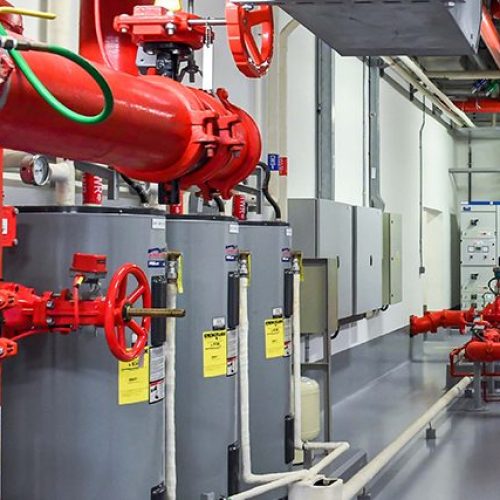
A sprinkler installation is only as reliable as its water supply.
Commercial facilities may require dedicated or appropriately designed fire water tanks and fire pump arrangements to provide the necessary flow and pressure during an emergency.
Before considering the system complete, check whether:
This is particularly important for large commercial buildings, warehouses, high-rise properties, and facilities with higher fire hazards.
A common mistake is treating the entire building as one fire risk.
An office floor, server room, electrical room, commercial kitchen, warehouse, and chemical storage area can have completely different suppression requirements.
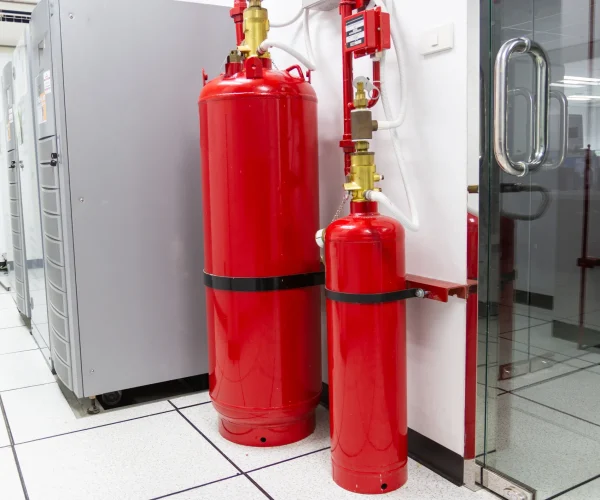
Water may create secondary damage to critical electronic equipment. Where the risk assessment and authority-approved design call for an alternative, a clean agent fire suppression system or other suitable technology may be considered.
Dubai Civil Defence guidance for clean agent systems requires approved design software and compliance with the UAE Fire & Life Safety Code of Practice and manufacturer requirements. It also addresses enclosure integrity, ventilation shutdown, nozzle arrangement, agent concentration, and other engineering considerations.
Clean agent systems can be particularly relevant for:
The choice between chemical clean agents and inert gas systems should be based on the protected hazard, room volume, occupancy, equipment sensitivity, enclosure condition, safety requirements, and applicable approvals.
Commercial properties often contain areas where a standard sprinkler arrangement may not provide the most suitable protection.
Cooking operations can involve oils and high-temperature cooking equipment. These areas may require a dedicated wet chemical suppression arrangement designed for the specific kitchen hazard.
Storage height, commodity type, rack configuration, packaging, and material characteristics can significantly affect sprinkler design. A warehouse storing combustible products cannot automatically use the same design as a low-hazard office.
Facilities handling flammable liquids, gases, chemicals, or other high-risk materials may require additional fire risk assessment and specialized suppression arrangements.
Electrical rooms, control panels, generators, UPS systems, and other energized equipment may require carefully selected suppression and detection solutions depending on the hazard.
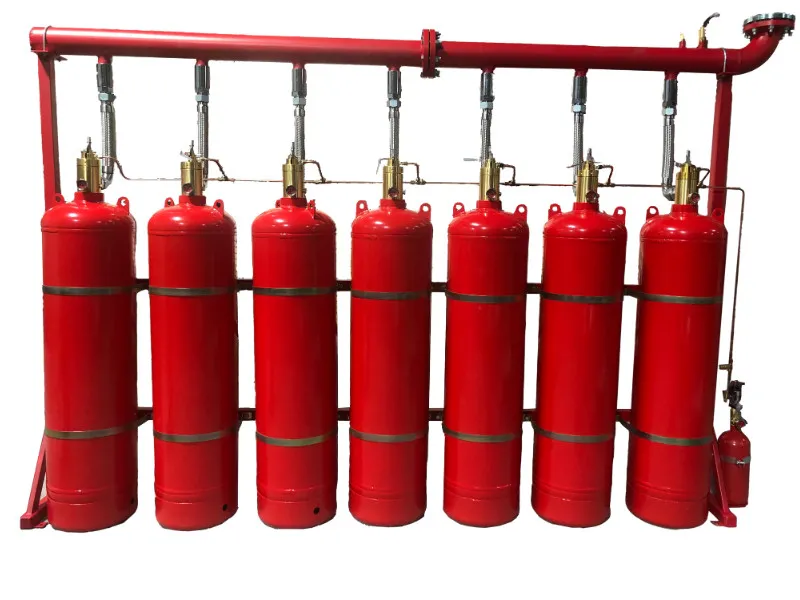
The UAE Fire & Life Safety Code also recognizes specialized systems such as pre-action, water spray, water mist, foam, wet chemical, and clean agent systems where applicable.
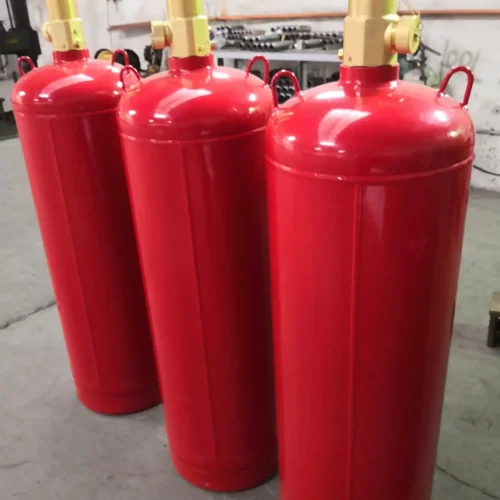
A fire suppression system should not operate as an isolated installation.
Early detection is critical because the objective is to identify a developing fire and initiate the appropriate response before the incident escalates.
A properly engineered commercial fire protection arrangement can integrate:
For gaseous suppression systems, the releasing system and fire alarm infrastructure need to be coordinated so that detection, warning, shutdown, discharge, and emergency response occur in the correct sequence.
A common mistake is treating the entire building as one fire risk.
An office floor, server room, electrical room, commercial kitchen, warehouse, and chemical storage area can have completely different suppression requirements.
After discharge, every major system component should be inspected.
This includes:
Dubai Civil Defence requirements specifically address enclosure integrity and leakage compensation for clean agent applications.
This is one reason why a professional site survey should happen before final system sizing.
A fire suppression system can be technically impressive and still create problems if approval requirements are not addressed from the beginning.
Commercial projects should allow time for design review, authority requirements, installation inspections, testing, commissioning, and documentation.
Depending on the system, this may include:
Dubai Civil Defence documentation requires specific systems to be submitted through the appropriate contractor or approval process, including clean agent, foam, wet chemical, pre-action, water spray, and water mist systems where required.
A suppression system cannot be considered reliable simply because it passed its initial inspection.
Commercial buildings change continuously. Offices are renovated, storage racks are moved, ceilings are modified, equipment is added, and rooms are repurposed. Any of these changes can affect fire protection coverage.
Regular inspection and maintenance should therefore verify:
The objective is simple: the system should be ready to operate when required, not merely appear compliant during a routine inspection.
Before submitting or upgrading a commercial fire suppression system, facility teams should ask:
Is the occupancy correctly classified, and have all high-risk areas been identified?
Is the selected suppression method appropriate for each protected area?
Are the fire pumps, tanks, pressures, flow rates, and hydraulic calculations adequate?
Will the detection and alarm system identify a fire early enough to initiate the required response?
Have kitchens, electrical rooms, server rooms, warehouses, generators, and other special areas been separately assessed?
Are drawings, calculations, approvals, test reports, and commissioning records complete?
Is there a documented inspection and maintenance programme to keep the system operational?
Taking these checks seriously can prevent costly redesigns, approval delays, system failures, and avoidable business disruption.
For commercial buildings in the UAE, fire suppression should be approached as an engineered safety system rather than a checklist of individual products. The right solution depends on the building, the hazard, the occupants, and the assets being protected.
AZAR FIRE SAFETY SYSTEMS provides fire protection solutions across the UAE, including water-based fire protection, gaseous and clean agent suppression, fire detection, fire pumps, and specialized suppression systems. Its approach covers design, installation, testing, commissioning, and maintenance with attention to UAE Civil Defence requirements and recognized fire safety standards.
For a commercial facility, the best time to identify a fire protection gap is before an emergency or inspection does it for you. A properly assessed, engineered, approved, and maintained suppression system gives building owners and facility teams a far stronger foundation for protecting people, property, and business continuity.