
When selecting a fire suppression system for a commercial, industrial, or high-value facility, terms such as UL Listed and FM Approved often appear in technical specifications. Both indicate that a product has undergone third-party evaluation, but they are not simply two names for the same certification.
For UAE projects, understanding the difference between UL vs FM approval can help consultants, contractors, facility managers, and property owners make better decisions about fire suppression equipment. The right certification should match the application, project specifications, authority requirements, and the performance expected from the system.
At a basic level, both UL and FM provide independent testing and certification for fire protection products. Their purpose is to provide evidence that equipment has been evaluated against defined performance and safety requirements.
However, the organisations approach certification from somewhat different perspectives.
UL Solutions provides testing and certification across a broad range of safety-related products. Its fire protection work covers sprinklers, extinguishing systems, fire pumps, valves, extinguishers, detection equipment, and other components. UL explains that certified products are evaluated against applicable standards and that its Product iQ database allows users to verify certification information.
FM Approvals, meanwhile, is strongly associated with property-loss prevention. Its certification programme evaluates products and services against FM Approvals requirements, with fire protection equipment among the categories covered. FM states that products carrying the FM APPROVED mark have completed its testing and certification process and are listed in the Approval Guide.
So, the first important point is simple:
UL Listed and FM Approved are both valuable third-party certifications, but they are not interchangeable labels.
A UL Listed fire suppression system or component has been evaluated by UL Solutions for a specific intended use and applicable requirements.
The word “Listed” matters. It indicates that the product has been assessed within a defined certification programme, rather than simply being tested by a manufacturer.
Depending on the product, certification may address:
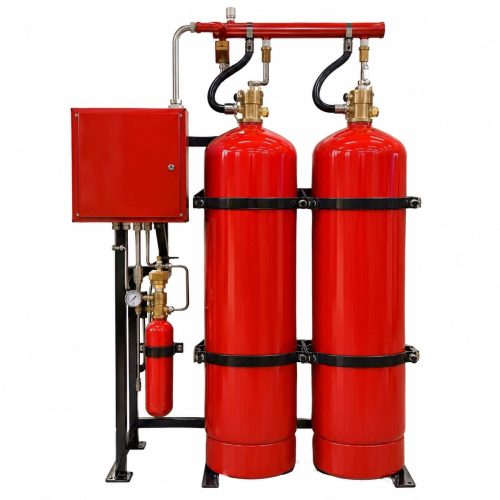
For example, UL tests and certifies automatic sprinklers to applicable sprinkler standards, including ANSI/UL 199. UL also evaluates complete or unitised extinguishing systems, including cylinders, valves, detection, actuation, piping, and discharge devices.
This is particularly important because a suppression system is not one individual piece of equipment. Its performance depends on how multiple components work together.
FM Approved fire suppression equipment has been tested and certified through FM Approvals’ certification programme.
FM’s emphasis is closely connected with property loss prevention. Its testing evaluates whether products and systems can perform as intended when properly installed and maintained, including their ability to reduce fire-related property loss.
FM Approved products are listed in the FM Approval Guide, which provides information about approved products and their application.
For these environments, the performance of a fire protection component can have a direct effect on the potential scale of property damage.
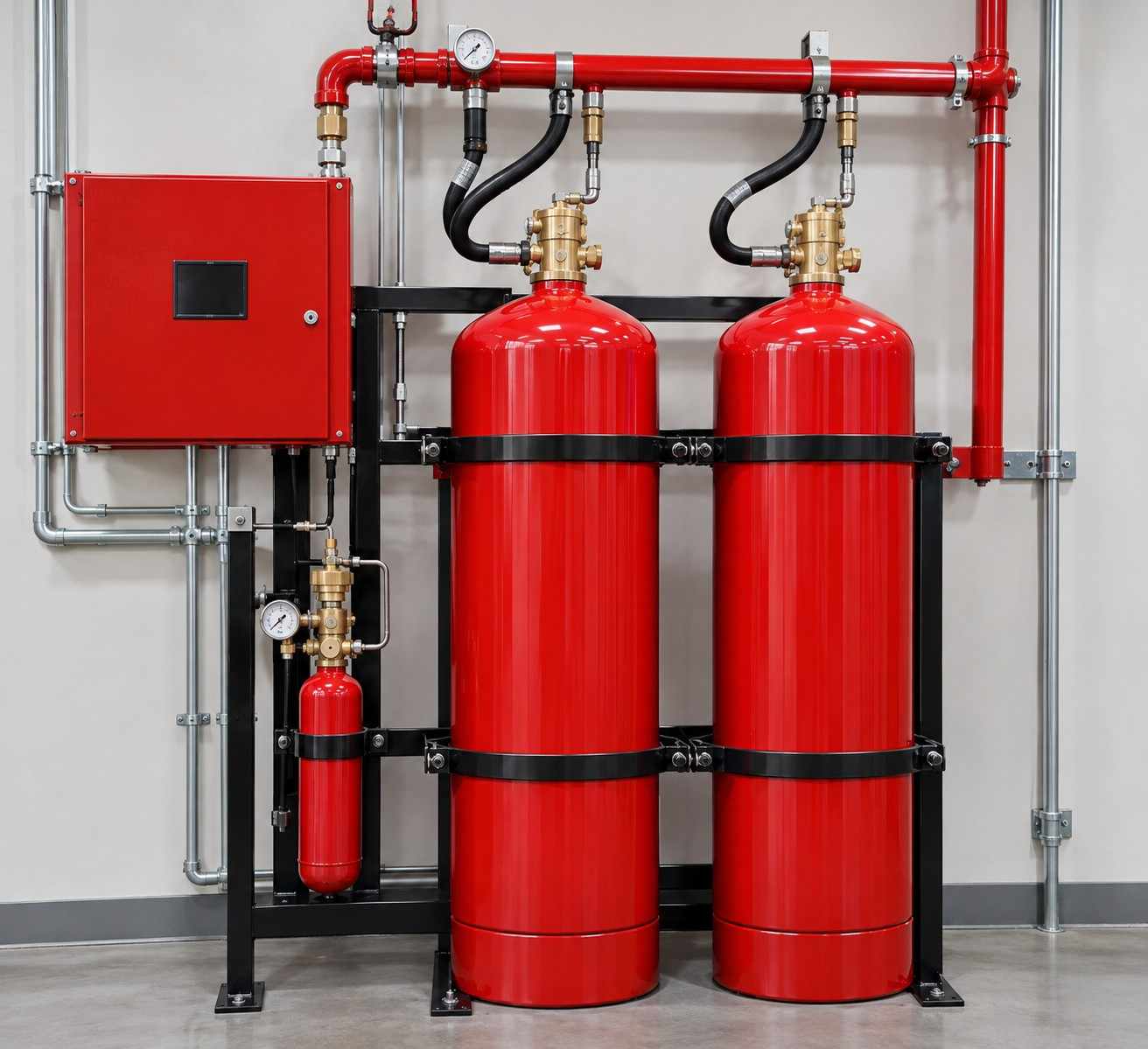
This is where many fire protection decisions go wrong.
A product may carry a recognised certification, but that does not mean it is automatically suitable for every installation.
Certification applies within a defined scope.
For example, a particular sprinkler may be certified for specific applications, pressure ranges, temperature ratings, installation orientations, or hazard conditions. A clean agent system may have specific design limitations relating to enclosure volume, agent concentration, nozzle arrangement, and discharge requirements.
FM’s technical guidance similarly makes clear that references to FM Approved products relate to products that have satisfied the relevant FM Approval criteria and should be checked against the Approval Guide for the complete application information.
This level of verification becomes especially important when a project specification specifically calls for UL or FM.
A fire suppression system is engineered as a complete protection arrangement.
Replacing one component with another that appears technically similar can change the system’s performance or certification status.
For example, changing:
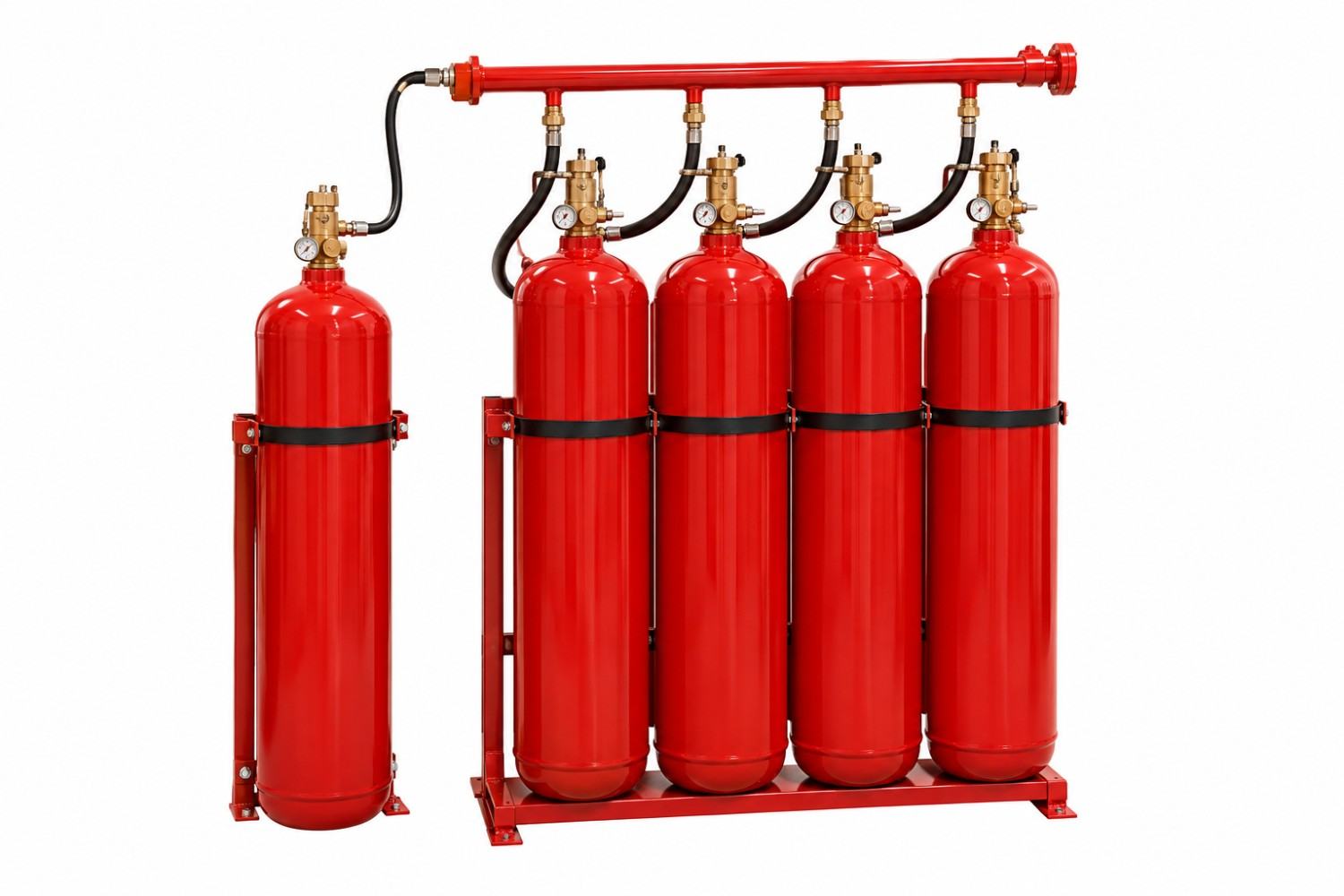
without checking compatibility can create design and approval issues.
This is why the certification of the individual component and the certification or approval of the system configuration should both be considered.
UL itself highlights the complex interaction between extinguishing-system components, including storage containers, detection, actuation, piping, and discharge devices.
In the UAE, the question should not simply be, “Is this product UL or FM?”
The better question is:
Does this exact product and system configuration meet the project’s applicable authority requirements, design standards, specifications, and intended hazard protection?
The UAE Fire and Life Safety framework recognises internationally tested and certified fire protection products in various applications. UL Solutions also notes that UL Marks are recognised by UAE Civil Defence in the context discussed on its technical guidance, while the UAE code references multiple recognised testing standards for different fire protection applications.
However, acceptance should always be verified against the specific project requirements and applicable authority approval process.
A certification mark by itself should never be treated as a substitute for proper engineering or authority approval.
There are situations where manufacturers obtain both UL listing and FM approval for the same or related products.
This can be useful for projects where consultants, insurers, clients, or specifications require different certification pathways.
For example, a clean agent fire suppression product may be offered with both UL and FM credentials. The existence of both does not mean the two certifications are identical. Instead, it gives the project team additional third-party evidence that the product has been evaluated under each applicable certification programme.
The important step is still to verify the exact model and its approved application.
Instead of choosing based on the logo printed on a product brochure, ask these questions first.
If the consultant specification states UL Listed, FM Approved, or both, follow that requirement unless formally revised through the appropriate design process.
A server room, warehouse, fuel storage area, electrical room, and commercial office do not have the same fire risk.
Do not rely only on a manufacturer’s general statement that its product range is “UL” or “FM.” Verify the exact model or configuration.
Certification should be considered across the complete engineered system, not as isolated equipment purchases.
Third-party certification and local authority approval serve different purposes. Both may need to be addressed.
Keep certificates, listings, technical data sheets, design calculations, approvals, commissioning records, and maintenance documentation together.
Certified equipment can sometimes have a higher initial purchase price than non-certified alternatives.
But comparing only the purchase price can be misleading.
A commercial fire suppression system represents a long-term safety investment. Equipment that has been appropriately tested, documented, installed, and maintained can provide stronger assurance to owners, consultants, authorities, insurers, and facility teams.
The more useful comparison is therefore not simply:
“Which product is cheaper?”
It is:
“Which compliant and properly certified solution provides the right protection for this hazard over the life of the facility?”
That shift in thinking can prevent costly substitutions, redesigns, approval delays, and performance concerns later.
For new construction, refurbishment, or system replacement projects, certification should be considered during the design stage rather than after equipment has already been purchased.
Start with the hazard assessment. Define the required suppression strategy. Identify applicable codes and project specifications. Then verify the certification and suitability of each major component before procurement.
For existing facilities, review whether the installed equipment still matches its original design and whether replacement components carry the required certification.
This approach makes UL vs FM approval a practical engineering decision rather than a marketing comparison.
UL Listed and FM Approved products both represent meaningful third-party evaluation, but the right choice depends on the application, project requirements, system design, and authority expectations. Neither certification should be selected simply because its logo appears more familiar.
For UAE facilities, the stronger approach is to verify the exact certification, understand what was tested, confirm where the product can be used, and ensure that the complete suppression system is engineered around the actual fire hazard.
AZAR FIRE SAFETY SYSTEMS offers a range of fire protection solutions for different commercial and industrial applications, including UL-listed and FM-approved clean agent systems, UL-listed foam deluge systems, electrical cabinet protection, pre-action systems, water mist, inert gas, and other specialised fire protection technologies.
Ultimately, certification is valuable because it provides evidence. The real protection comes from combining that evidence with correct system selection, professional engineering, proper installation, commissioning, and ongoing maintenance.